
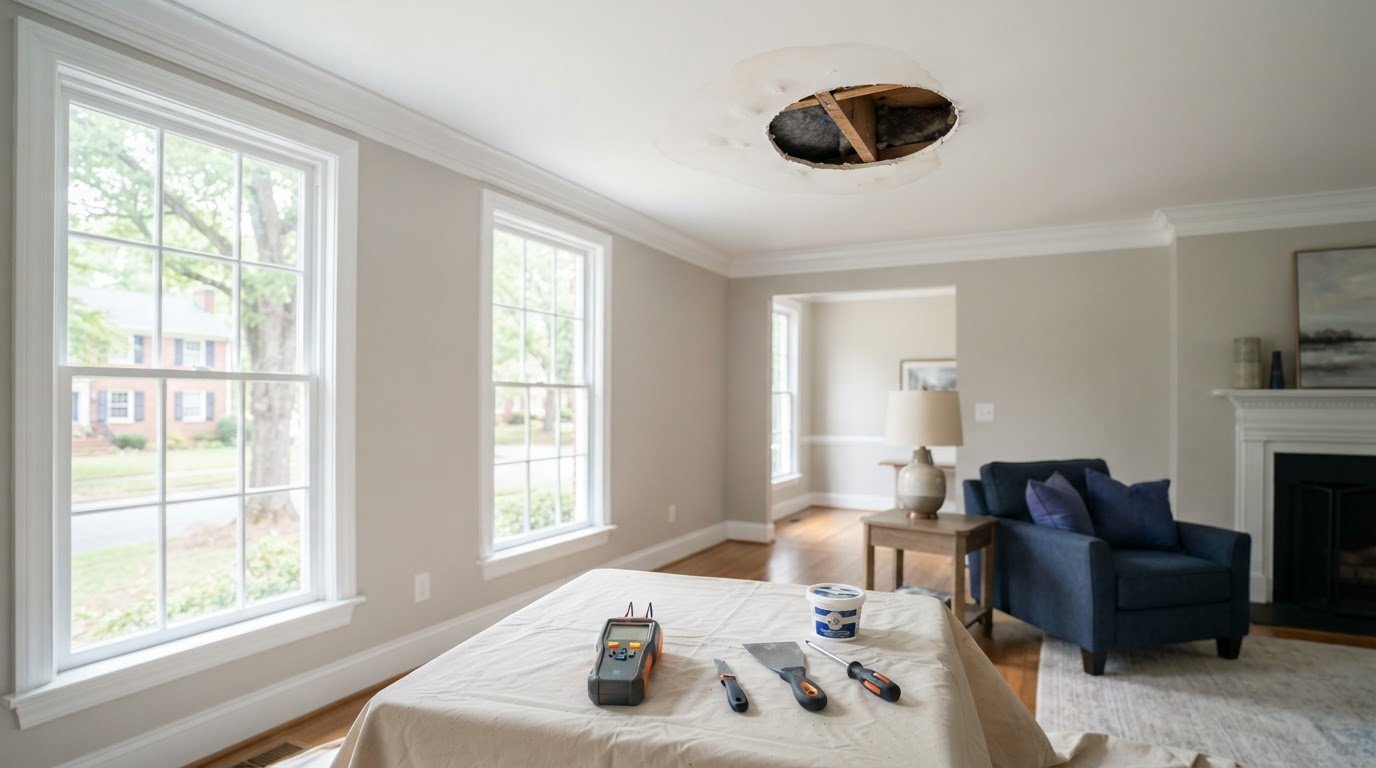
Water Damage Ceiling Repair in Richmond, VA After Roof Leaks
A ceiling stain can remain after a roof leak is fixed, but the mark alone doesn’t reveal how far the damage extends. For water damage ceiling repair from a roof leak in Richmond, VA, first assess whether the ceiling is dry and stable. Then look for signs that water reached the walls, insulation, or framing. The stain may be only the visible part of a larger problem.
It’s understandable to hope that fixing the roof will resolve the indoor damage, too. But water can travel beyond where it first appears. Damp materials, peeling paint, sagging drywall, or a musty smell deserve attention. Addressing these signs early can help limit further damage.
This article explains how to assess the ceiling after the leak is addressed, which materials may be repaired and which may need replacement, and how a stain can signal damage behind the surface. You’ll also learn what to check before choosing the next repair step.
Key Takeaways
- After the roof leak is repaired, look beyond the visible stain for dampness, peeling paint, sagging, or musty odors that may point to lingering moisture.
- Whether ceiling damage can be repaired depends on the condition of the affected materials; damage that has weakened or spread may need more than surface touch-ups.
- A ceiling mark can be a clue to water that has traveled into walls, insulation, or framing, so consider the surrounding areas when assessing the damage.
- Repair costs depend on the scope of roof work and the materials and labor involved; the article explains the factors that shape an estimate without confusing roof repairs with ceiling restoration.
Assessing damage after the water issue is fixed
After the leak is repaired, assess both the roof and the interior before closing up the ceiling. Dark spots, peeling paint, damp insulation, and musty odors can indicate remaining moisture.
Roof and Attic Assessment
Start at the repaired roof area, then inspect the attic directly below it. Look for damaged shingles or flashing, water marks on wood, damp insulation, and fresh moisture. Checking both the roof surface and attic can help locate where water entered. Inspecting the roof twice a year can help reveal new damage before it reaches the ceiling.
After roof work, watch for signs that water is still getting in. If the ceiling stain grows or fresh dampness appears after rain, reassess the repair promptly.
In Richmond, roof repairs typically require a permit, and fees vary with the project scope. Whether roof and ceiling work fall under the same permit depends on the work involved, so clarify the permit scope before repairs begin.
Mold Checks After Leaks
Check areas where moisture may have lingered, including the attic, basement, crawlspace, and around the foundation. The U.S. Consumer Product Safety Commission includes looking for obvious growth in these locations as part of mold checks. Look for visible patches and note musty odors near damp materials. Keep the inspection focused on places connected to the leak, not only the ceiling stain.
When arranging further assessment, note any persistent dampness or visible growth. Wet insulation and stained wood can help show that water has spread beyond the ceiling surface.
When hiring a roof leak repair contractor in Richmond, ask for license details and proof of insurance. Review the written scope, including which roof area will be repaired and how the work will be checked afterward. Compare it with the visible damage you’ve documented.
For urgent roof concerns, keep people away from active drips and any visibly sagging ceiling. Record where stains or peeling paint appear, then check those spots again after the next rainfall. Keeping track helps distinguish an old mark from continuing water entry.
What types of ceiling damage can you repair?
Once the roof leak is addressed, the ceiling repair depends on the condition of the affected material. A dry, firm ceiling with a small surface stain may need cleaning, primer, and paint. Soft, sagging, or crumbling material may need to be removed and replaced. Match the repair to the damage rather than simply hiding the mark.
Water can spread beyond the point where it first dripped. In Richmond homes, worn shingles or damaged flashing around vents can let water in. It may then travel through ceilings, walls, and insulation, leaving bubbling paint, swollen drywall, or marks along a wall joint. For water damage ceiling repair from a roof leak in Richmond, VA, assess the visible damage outward and check whether nearby surfaces remain sound.
- Surface staining: If the ceiling is dry and solid, prepare the surface and use a stain-blocking primer before repainting.
- Localized drywall damage: Remove compromised material, replace the affected section, then finish and paint it to blend with the surrounding ceiling.
- Damage extending into walls: Include affected wall areas in the repair scope so moisture marks and weakened finishes aren’t left behind.
Does homeowners insurance cover ceiling damage caused by a roof leak in Virginia? Coverage depends on the policy and the circumstances behind the leak. In a case described by the U.S. Government Publishing Office, an insurer’s adjuster concluded that a leak caused by improper shingle installation wasn’t covered under that policy. Review your policy language and document the damage and its apparent cause.
If ceiling and wall repairs form part of a larger interior restoration, home damage restoration can address the affected areas as one coordinated project. Choosing water damage ceiling repair after a roof leak in Richmond, VA starts with identifying which materials remain sound and which need replacement. Describe the damage and whether drywall feels soft or has begun to sag. Those details help define the repair scope.
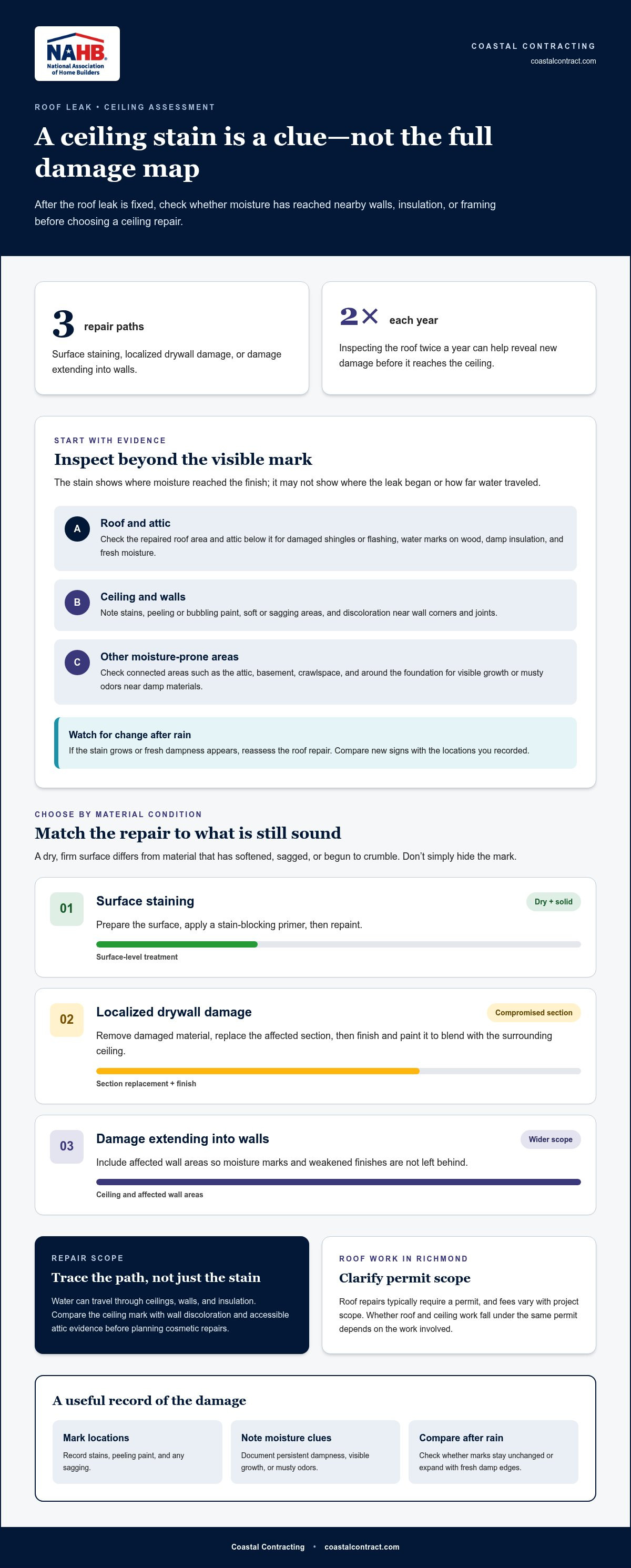
Ceiling stains and interior water damage
A brown ceiling mark shows where moisture reached the finish, not necessarily where the leak began. In Richmond homes, water from a roof leak can spread through ceilings, walls, and insulation before appearing as a stain. A mark near a light fixture or wall seam may sit below a larger affected area.
Trace the evidence before planning cosmetic repairs. Note each stain’s location, photograph peeling paint or bubbling drywall, and compare the marks after the roof repair. A stain that remains unchanged is different from one that expands or develops fresh damp edges. That distinction can help determine whether interior materials need further attention.
- Ceiling: Record stains, soft-looking areas, peeling paint, and any sagging around the affected spot.
- Walls: Look below the ceiling mark for discoloration, bubbling, or paint separating near corners and joints.
- Insulation and framing: Check accessible attic areas for damp insulation or water marks on wood.
Follow the water’s path, not just the stain. For example, a mark above a bedroom wall may connect to discoloration farther down the wall, while an attic water mark may sit away from the visible ceiling damage. These clues help show how far water traveled and which finishes need repair after the source is fixed.
Pay attention early because water from a roof leak can contribute to mold growth and damage wiring or wood framing. If a stain appears near a ceiling fixture, note its location rather than treating it as paint damage alone. Record whether nearby paint or drywall changes after rainfall.
After the roof issue is resolved, account for every visibly affected surface. A clean-looking ceiling doesn’t rule out water marks behind wall finishes or insulation. In Richmond, documenting the ceiling, adjacent walls, and attic together gives a clearer picture of the interior damage and helps define the repair work.
What is the average cost to repair a roof leak in Richmond, VA?
That estimate covers roof work, not ceiling restoration, so keep the two scopes separate when reviewing a project estimate.
These figures describe different estimate formats, not a fixed price for every Richmond roof.
The final amount reflects the roof area and the work needed to stop water entry. For example, replacing worn shingles differs from repairing damaged flashing around a vent. These are roof repair estimates, not ceiling repair prices.
- Roof size: A larger repair area affects material quantities and labor.
- Damage location: Shingles, flashing, and other roof details require different repair work.
- Materials and labor: The estimate may separate supplies, equipment, and labor rather than giving one combined figure.
Treat these as components of that estimate, not universal rates.
The price for a specific project depends on its scope and is provided after a quote request; key factors include roof area, material, damage location, and required labor. Plan ceiling work separately, since interior repairs address damaged finishes and materials rather than the roof opening itself.
Once the roof source is addressed, discuss your interior repair project to plan the next step for affected ceilings.
Coastal Contracting: General Contracting
Coastal Contracting provides home damage restoration for homeowners dealing with ceiling and interior damage after a roof leak. Once the leak is fixed and the affected areas are assessed, the company can help plan repairs to damaged interior finishes as part of a broader project. General contracting can also coordinate related remodeling when the repair connects to a larger home improvement plan.
Describe what you’ve observed, such as stained drywall, peeling paint, or damage extending from the ceiling onto a wall. These details help define the work and whether it fits home damage restoration or interior remodeling. Coastal Contracting also provides exterior remodeling for broader home projects.
Contact Coastal Contracting or visit coastalcontract.com to discuss your repair needs.
Plan the next repair step
For water damage ceiling repair from a roof leak in Richmond, VA, turn your observations into a clear scope of work. Note which rooms and finishes were affected, what has already been repaired, and what still needs attention. Keep your notes and photos together so the plan accounts for the full project, not just one visible mark.
If ceiling repair is part of a broader home project, Coastal Contracting provides general contracting, home additions, and exterior remodeling. Planning related work together can help you consider the repair alongside other improvements instead of treating each decision in isolation. Choose a next step that suits your home and the work you want done.
Contact Coastal Contracting today to discuss your project and move forward with a clear plan.
Frequently Asked Questions
How can I possibly know if there is an existing problem with my roofing system in Richmond?
Look for signs that return after rain, not just a single old mark. In Richmond, worn shingles or damaged flashing around vents can let water in. Note where leaks appear and whether the same area becomes damp again after storms. A pattern across rooms or near roof penetrations can point to an ongoing roofing issue before interior finishes are repaired.
If my roof is leaking, does it mean that I need to replace it completely in Richmond?
No. A roof leak in Richmond can often be resolved with roof repair rather than full replacement. The decision depends on whether damage is limited to a repairable area or affects broader sections of the roofing system. A standard asphalt shingle roof in Richmond typically lasts 20-25 years, so its age and overall condition are useful context alongside the leak’s location.
Will the ceiling repair be visible after you’re done?
It can be, depending on the repair area, ceiling texture, paint color, and lighting. A small patch may not blend in if the surrounding paint has faded or the ceiling has a textured finish. Matching the texture and repainting a wider area can create a more consistent appearance, especially where daylight highlights differences.
How can you tell if a ceiling is dry enough to repair after a roof leak?
Before applying patching materials or paint, check that the ceiling feels firm and has no fresh dampness. A moisture meter can help compare the affected area with nearby, unaffected material; readings should no longer indicate excess moisture. Also inspect the ceiling from an accessible attic, since a dry-looking surface may conceal damp insulation or framing above it.
What are the steps to repair a water-damaged ceiling from a roof leak?
First stop the roof leak, then protect the room and move furniture away from the work area. Remove ceiling material that’s no longer sound, inspect the exposed cavity, and allow affected surfaces to dry. Replace damaged drywall, secure the seams, apply joint compound, sand the repair smooth, then prime and paint. The final appearance depends on matching the existing ceiling texture and coating.
When should a water-damaged ceiling be replaced instead of repaired?
Replace the affected section if the drywall has lost its shape, crumbles when handled, or can’t hold fasteners securely. A small, stable area may suit a localized repair, while damage across multiple sections calls for a broader replacement plan. Check the framing above the ceiling, too. Weakened support can make a surface patch unsuitable even if the visible opening looks small.